








National Bio and Agro-Defense Facility (NBAF) | Manhattan, KS
Completion Date: 2023
Project Overview
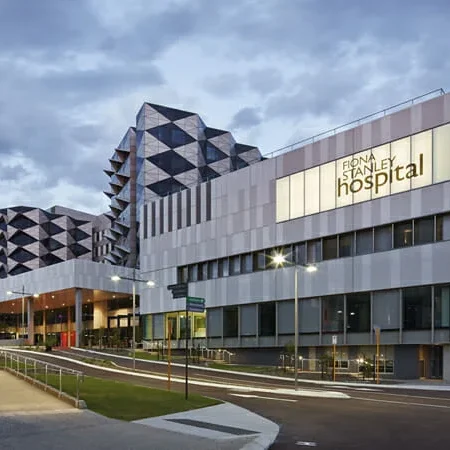
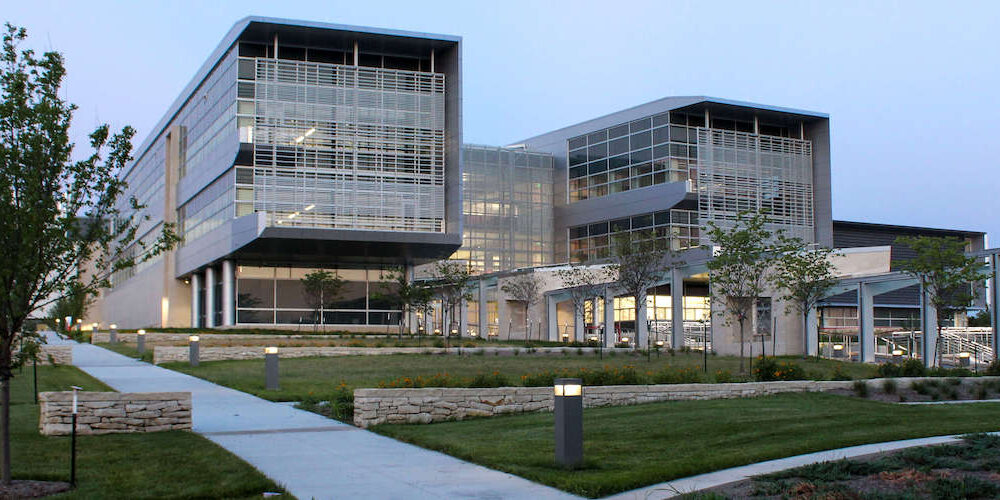
The National Bio and Agro-Defense Facility (NBAF), located in Manhattan, Kansas, is the United States first integrated facility for research, diagnostics, training, and evaluation (RDT&E) for agricultural and zoonotic diseases. NBAF can address threats from high-consequence zoonotic disease agents and foreign animal disease (FAD) agents.
Early in the project, the Kansas Department of Health and Environment (KDHE) designated the NBAF a major pollutant source, which requires demonstration that emissions from the boilers, generators and incinerators will not cause or contribute to air pollution above the regulated thresholds. Specifically, the facility must meet the National Ambient Air Quality Standards (NAAQS) and Prevention of Significant Deterioration (PSD) increments for particulate matter (PM10), sulfur dioxide (SO2), and nitrogen dioxide (NO2).
Why CPP
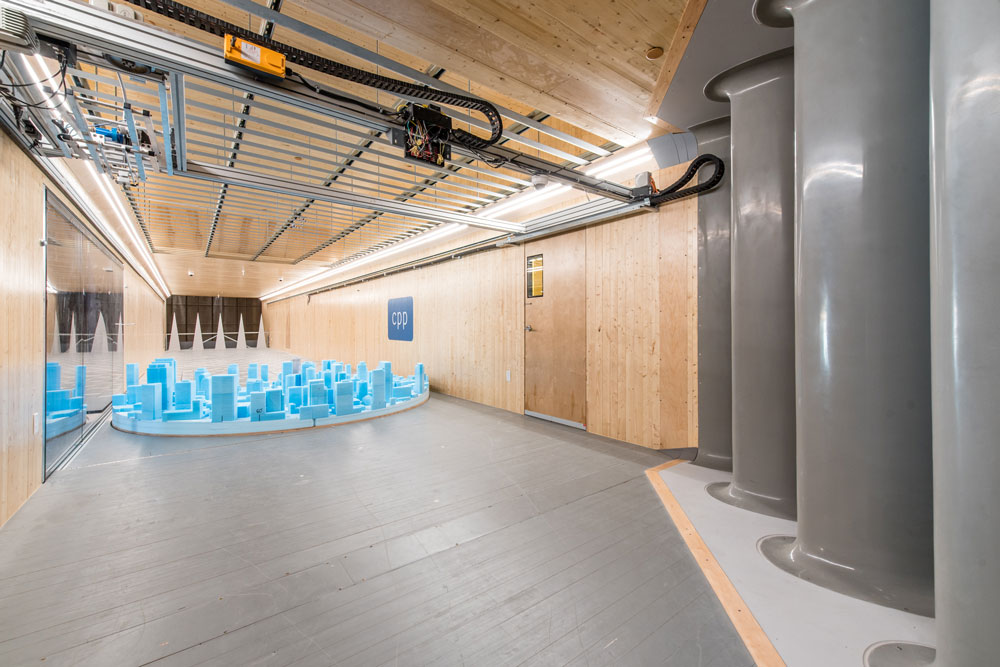
CPP’s air quality team conducted an Air Quality Impact Assessment (AQIA) as part of the permitting process. Having previously tested NBAF in the wind tunnel for potential health and odor impacts, the team already understood the facility’s mission and requirements.
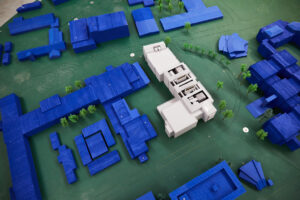
NBAF includes two laboratory facilities and three outbuildings. One of the outbuildings, the Central Utility Plant (CUP), features seven 800 BHP Scotch marine (fire-tube) boilers, which provide steam service to the main lab building. All boilers are equipped with dual fuel burners (natural gas and #2 fuel oil), and one of the seven boilers serves as a backup unit. The backup boiler is not required to meet design steam loads, and fuel oil is only used for emergency operation of the boilers. Otherwise, natural gas is the design fuel.
In addition, the CUP relies upon seven 2,000 kW diesel backup generators for emergencies. These are EPA Tier 2 certified engines available exclusively for emergency situations, maintenance and testing purposes. One of these seven generators serves as a redundant unit and is not required to meet design loads under emergency conditions.
Finally, two identical medical waste incinerators in the laboratories also exhaust to the atmosphere. Collectively, the boilers, the generators, and the incinerators represent 16 total emission sources that required investigation for air quality compliance.
To assess compliance with NAAQS and PSD increments, CPP conducted the AQIA using the EPA’s preferred modeling system, AERMOD. Our team evaluated air quality impacts from the boilers, generators, and incinerator exhausts, and our initial modeling efforts suggested that NAAQS compliance might be problematic in worst-case boiler operating scenarios. However, the facility passed with flying colors under more realistic boiler operating conditions. Considering alternate stack heights allowed the proposed facility to meet NAAQS and PSD increment requirements with minimal operational restrictions.
Client Info
Project Manager:
Timothy Barr
Project Technical Director:
Eugene Cole
Department of Homeland Security Science and Technology Directorate
Architect:
NBAF Design Partnership (NDP)
Includes the following firms:
Perkins + Will
Flad Architects
Merrick and Company
Ccrd Engineers
Affiliated Engineers Inc.
Expert Details
CPP Project Director:
Dr. Ron Petersen
info@cppwind.com
Services Provided