




What is CFD?
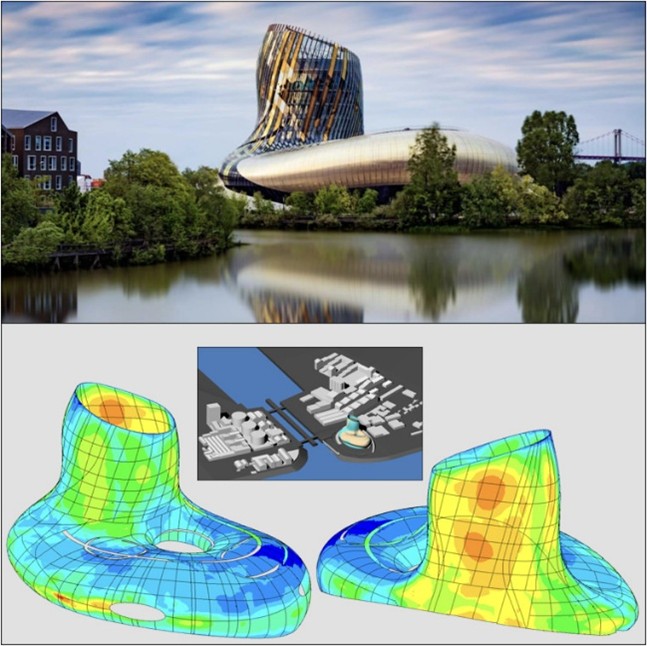
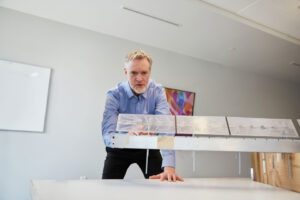
Cladding Study on Unique Structure
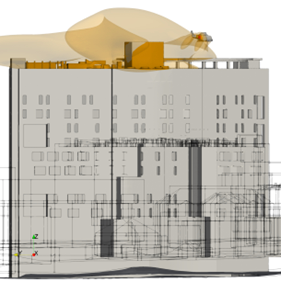
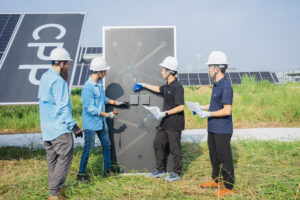
Helicopter Downwash
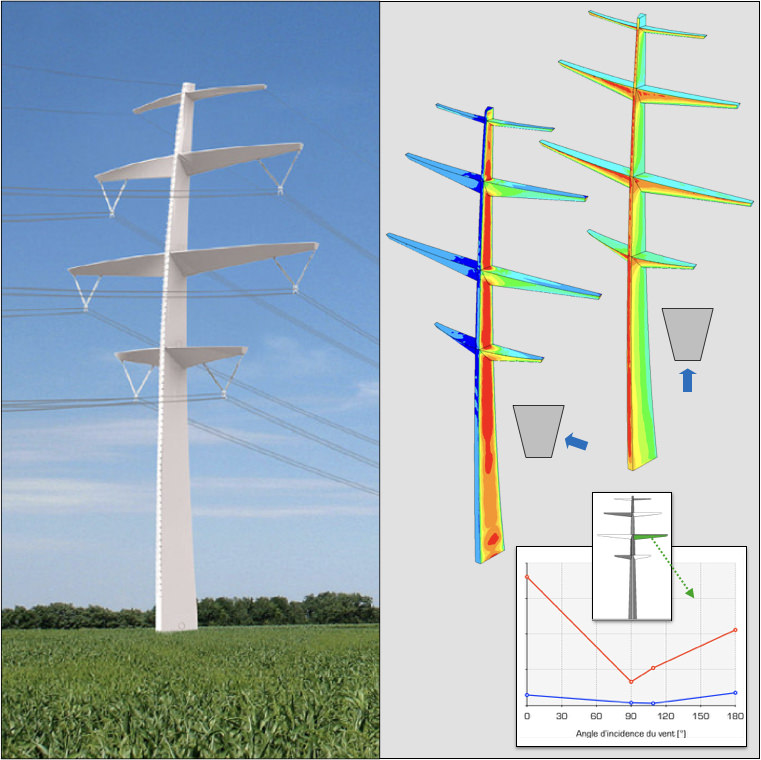
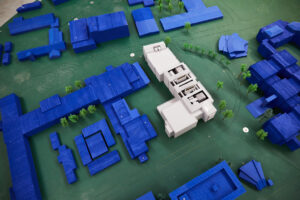
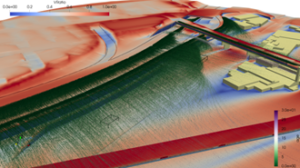
Wind Loading Study on Transmission Lines
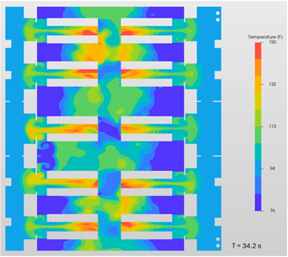
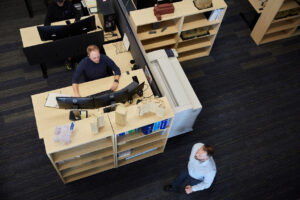
Data Center Hall Flow Modeling
Computational Fluid Dynamics (CFD) is a method for simulating fluid flow numerically rather than experimentally in the wind tunnel. Despite the modern and digital outputs it generates and the hardware it requires, it has a very long history and stands on the shoulders of giants, with the equations and methods used dating back well before the invention of computers. Claude-Louis Navier and George Gabriel Stokes give their names to the partial differential equations which describe (most) fluid flows through their work back in the 19th century. Still back in the 19th century, Osborne Reynolds, a giant in fluid dynamics, popularized the concept of Reynolds averaging which is the mathematical cornerstone of most of the industrial CFD work conducted in the last 50 years.
The Navier-Stokes equations are elegant, but their solution and the natural phenomena they describe is messy. Turbulence is to blame. From the eye of Jupiter to the tiniest eddy of in the wake of a bacterium, the flow field can be chaotic, constantly transforming and breaking down energy from larger to smaller and smaller scales. A brute-force solution of this reality is possible, but it requires evaluating the velocity field simultaneously at the biggest and smallest scales in time and space, which is beyond available computing power for all but the most trivial and academic problems. This approach is called Direct Numerical Simulation (DNS) and is not relevant to industrial problems.
Therefore, approximations and models must be devised to extract useful information from their formulation. They can be “Reynolds Averaged”, which transforms them such that they can produce steady-state (similar but not identical to a time average) solutions more cheaply. Turbulence models devised in the later half of the 20th century and beyond can collapse their complexity to include and predict turbulence without having to resolve all of the fluctuations in time and space. The advancement of computational power has enabled the use of more exotic models, which in some ways become simpler as more and more of the elegance of the Navier-Stokes equations can be preserved rather than modelled. Detached Eddy Simulation (DES) and Large Eddy Simulation (LES) are such approaches, where the largest scales are directly resolved, and the smallest are modelled. Long restricted to academic studies, these approaches are now finding industrial applications, and the field is evolving rapidly.
At CPP, we conduct numerous steady-state CFD simulations along with more advanced transient Large Eddy Simulations making use of considerable computational resources. Two large High-Performance Computing (HPC) clusters located in our Sydney and Marseille offices work round the clock on solving dozens of queued simulations responding to our clients’ needs submitted by CFD Engineers in all CPP’s engineering offices. Every year, thousands of individual simulations are configured, solved, post-processed, and analyzed by our experts to provide high quality advice to the AEC, HVAC, Datacenter, Renewables, Aerospace, and Industrial sectors.
CFD is powerful, but its applications are not unlimited, and it is not always the best approach for some problems. Wind requires careful and special treatment. So much so that the application of CFD to wind has developed into its own sub-domain: Computational Wind Engineering, or CWE. When it comes to determining design wind loads, CWE is not always the cheapest or safest option. At CPP, we have the benefit of decades of proprietary wind tunnel data against which we can verify and calibrate our models. Thanks to this information, we have developed techniques which allow us to conduct CWE simulations safely for wind loading with strict guardrails.
CPP has a proven track record of delivering complex CFD modelling work to our clients, across a huge range of topics and with world-leading expertise in CWE:
- Pedestrian Wind and External Thermal Comfort
- Topographic Speedup
- Transmission Line Studies
- Structural Loading for Buildings
- Wind Loading for Solar Structures
- Internal Airflow Management: from thermal comfort in offices to design of aerospace clean rooms
- Pollutant Management in Laboratories and Hospital Facilities
- Vehicle Emissions in Parking Garages
- Wind-Driven Rain
- Wind-Blown Sand
- Pool Sloshing and Spray
- Wave Loading
- Pressure and Rain Performance of Louvres
- Exhaust Dispersion: from laboratory exhaust to datacenters
- Particulate Management: paint overspray, stockpile loss, salt spray
- Heat management of Battery Energy Storage Systems (BESS)
- Wind Tunnel Design (for both internal and external clients)
- Launch Vehicles
- Helicopter Downwash
- Wind Shear and Turbulence on Runway Approaches
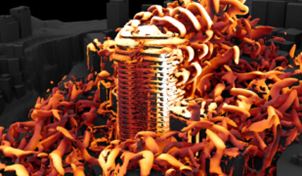
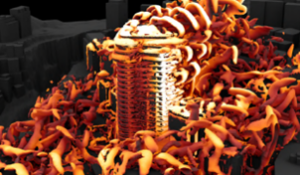
Wind Loads on a Tower
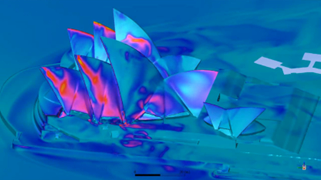
Sydney Opera House Wind Monitoring Platform
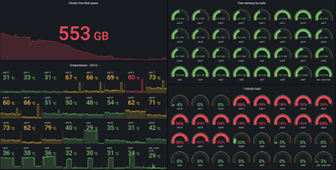
Monitoring on One of CPP’s HPC clusters