









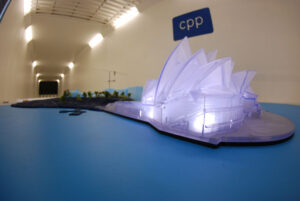
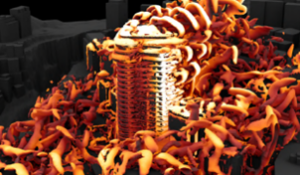



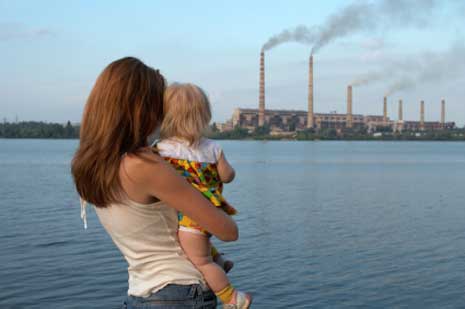
 We get it. Demonstrating compliance with air quality regulations can be frustrating. CPP’s permitting engineers help clients wade through laundry lists of air quality rules virtually every day. But a couple of stories that passed across our desks in the last couple of weeks remind us why these rules are there to begin with: to protect the health and well-being of all Americans, including vulnerable populations like the very young.
Researchers at the University of Pittsburgh recently published findings demonstrating that exposure to fine particulate air pollution during pregnancy and infancy may be associated with childhood development of autism spectrum disorders (ASDs).
The University of Pittsburgh’s Graduate School of Public studied families in six counties of southwestern Pennsylvania and obtained detailed records of where mothers of children with and without a diagnosed ASD had lived in the years up to their child’s second birthday, including during pregnancy. Coupling these data with air quality records, researchers built a model to estimate each child’s exposure to so-called PM2.5, or particulate matter smaller than 2.5 microns wide.
PM2.5 pollutants are small enough to embed deep within the lungs, and they readily pass into the bloodstream. Common culprits include soot, smoke, and dust. According to the study’s findings, children who had higher exposure levels to PM2.5 pollutants were 1.5 times more likely to suffer from ASD than those with minimal exposure.
A second study from the Mailman School of Public Health at Columbia University uncovered an association between exposure to air pollution and lower child IQ, particularly for children who grow up in poverty. The Columbia study focused on exposure to polycyclic aromatic hydrocarbons (PAH), which arise from the combustion of carbon-based fuels like wood, coal, and oil and can include a wide range of particulate matter.
Researchers followed more than 275 children, and their mothers, from pregnancy through early childhood. They measured what are known as PAH-DNA adducts, which are DNA binding products associated with hydrocarbon exposure, within the umbilical cord during fetal development. Relying on self-reported data about the subjects’ material hardship, the scientists then correlated poverty and PAH exposure with IQs, as measured on the Wechsler Intelligence Scale for Children when the children turned 7.
The researchers found “statistically significant interactions” between the combination of poverty and PAH exposure and the children’s measured IQs. According to lead author Dr. Frederica Perera, “The findings support policy interventions to reduce air pollution exposure in urban areas.”
From wind tunnel testing of industrial facilities to our comprehensive air permitting services, we at CPP believe that ensuring air quality is about far more than ticking the right boxes on the right forms. It’s about protecting public health and ensuring that the next generation grows up to be even healthier than ours. It’s a responsibility we take very seriously.
References
-
- Evelyn O. Talbott, Vincent C. Arena, Judith R. Rager, Jane E. Clougherty, Drew R. Michanowicz, Ravi K. Sharma, Shaina L. Stacy. Fine particulate matter and the risk of autism spectrum disorder. Environmental Research, 2015; 140: 414 DOI: 10.1016/j.envres.2015.04.021
- Julia Vishnevetsky, Deliang Tang, Hsin-Wen Chang, Emily L. Roen, Ya Wang, Virginia Rauh, Shuang Wang, Rachel L. Miller, Julie Herbstman, Frederica P. Perera, Combined effects of prenatal polycyclic aromatic hydrocarbons and material hardship on child IQ, Neurotoxicology and Teratology, 2015; 49: 74, DOI:10.1016/j.ntt.2015.04.002.